01
FOUNDATION ESTABLISHED
Define the system.
Product requirements, sensing architecture, interfaces and component studies give the design a shared foundation.
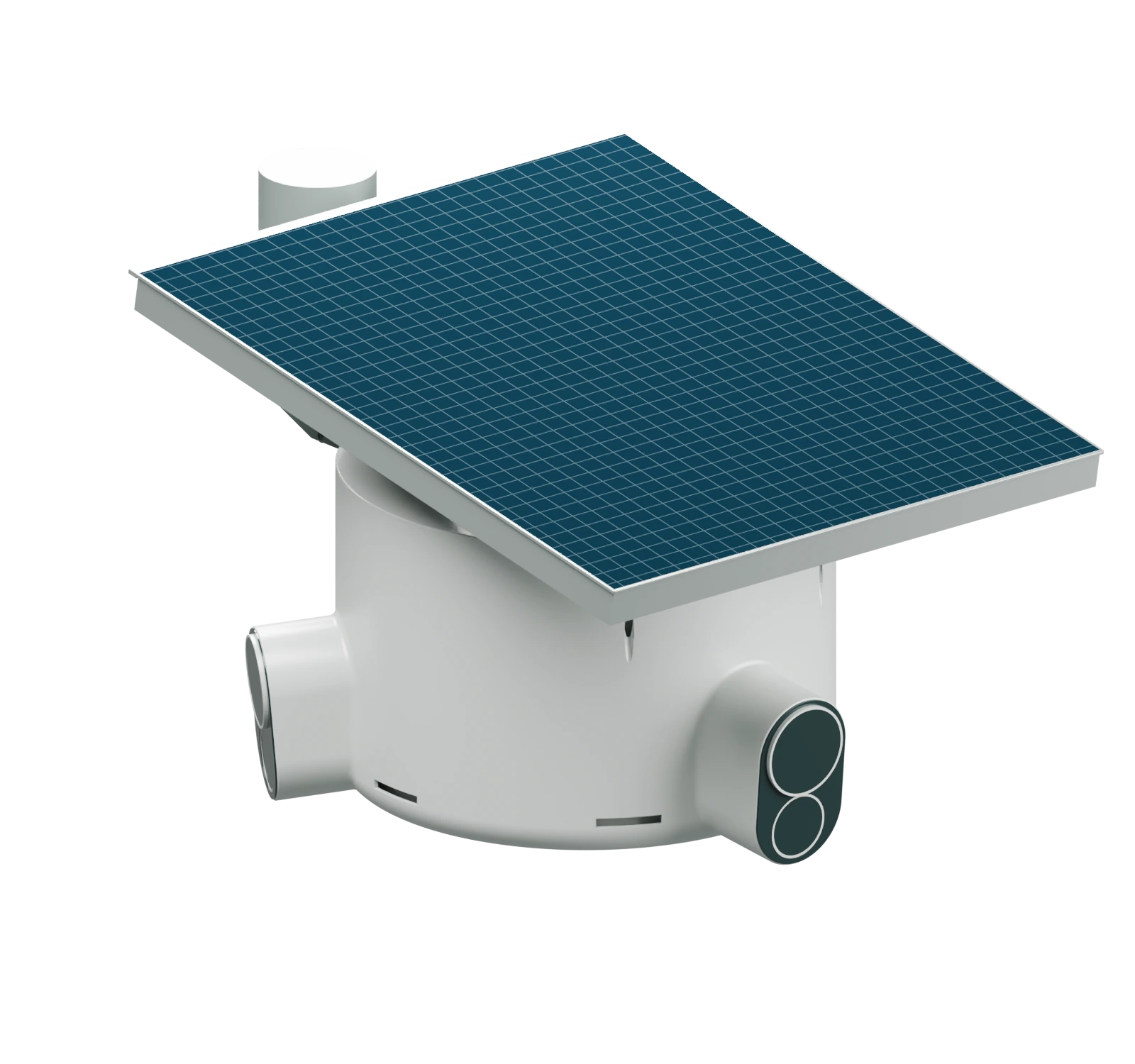
Meet Outpost. A solar-powered monitoring node being built to bring eyes, ears, and environmental awareness to remote sites.
Engineering design & customer discovery
Changing sites. Critical assets. Long distances between them. Getting the full picture shouldn’t depend on already having power and a network in place.
Outpost brings multiple sensing approaches into one self-contained design, helping teams understand what changed, where to look, and what needs a closer assessment.
A common platform for sensing what’s happening around a site. Explore the hardware we’re developing.
Real design geometry. Finishes shown are illustrative.
Three visible-camera positions pair with thermal arrays, bringing visual context and heat signals into the same design.
The visible-camera figure is a design target. The assembled camera’s actual horizontal and vertical fields remain unconfirmed. Thermal arrays provide heat triggers rather than inspection imagery.
Audible and ultrasonic sensing are intended to add context around activity and possible electrical arcing or corona on nearby assets.
Detection range and performance require testing on real hardware.
The sensing plan brings together gas, particulates, temperature, humidity, pressure, rain and lightning to put site conditions in context.
Sensor selection, outdoor integration and valid sampling schedules remain in development.
An integrated solar roof, protected battery and cellular connection are central to the standalone concept. A low-power tier is intended to wake the vision processor when needed.
The battery design targets more than 58 hours with no solar input at the 0 °C design point, with vision processing awake 5% of the time.
Autonomy has not been demonstrated. Exact pack selection, delivered battery energy, the complete load budget and cellular service still need qualification.
Designed as a system.
Being validated as a system.
Solar design target
Visible FOV target, per camera
Current overall CAD envelope, rounded
No-solar autonomy target
Design targets, not measured product performance. Visible-camera FOV remains unconfirmed. Autonomy assumes the 0 °C design point with vision awake 5% of the time; battery and full-system energy use remain unqualified.
Our first focus is solar and battery-storage construction. Explore the possibilities for general construction sites, utilities and remote industry too.
From after-hours security to dust, rainfall and progress records, we’re developing Outpost to help teams keep watch as a site takes shape, then explore continued monitoring in operation.
Deployment concepts only. No live installations or customer pilots are claimed.
Practical applications we’re developing toward. Open a use case to see how it could help.
Flag potential unauthorized people, vehicles or unusual activity for review.
Capture event images around material storage, equipment, temporary buildings and access points.
Combine camera images, thermal readings, particulates and gas indicators to flag potential fires for review.
Watch for heat and smoke around waste piles, vegetation, stored materials and hot-work areas.
Flag unusual heat around generators, temporary electrical equipment, transformers and inverters within thermal coverage.
Use ultrasonic sensing to look for signs of arcing, corona or tracking as electrical systems are energized.
Track particulate trends near earthworks, demolition, haul roads and site boundaries. This would not identify silica specifically.
Track CO and selected gas or VOC indicators, depending on the final sensors.
Record rainfall intensity and accumulation to help teams plan work and respond after storms.
Combine rainfall records with scheduled photographs of drainage areas, silt fences and other controls to support inspections.
Report nearby lightning activity and local temperature, humidity and pressure.
Take scheduled photographs to document site changes, milestones and before-and-after conditions.
Provide event snapshots and sensor history to help investigate damage, alarms and unusual activity.
Detect movement, tilt or impact affecting the monitoring unit itself.
Planned applications. Detection performance, alerting and outdoor operation still require hardware and field validation.
A core that stands alone.
An ecosystem that can grow.
We’re turning the system concept into an integrated design, while learning which field workflows matter most.
Product requirements, sensing architecture, interfaces and component studies give the design a shared foundation.
Editable schematics, preliminary board placements, enclosure CAD and firmware studies are taking shape alongside customer discovery.
Prototype assembly, complete energy measurements, sensing performance and environmental qualification remain ahead.
The design is active. Here is what the latest engineering snapshot actually says.
The latest CAD study brings the solar roof closer to the body, retains the concealed wiring and vertical main board, and rounds exposed custom edges. The complete design is now 335 mm tall.
These are nominal design changes. Solar-entry sealing, rain-sensor exposure, thermal behavior, strength and physical serviceability still need validation.
The complete power budget, battery delivery, valid particulate-sampling schedule, camera operation, outdoor sensor performance, sealing and thermal behavior remain open.
Model checks and software replay support development. Physical hardware and field performance have not been tested.
Customer discovery starts with solar and battery-storage construction: how teams watch changing sites, assess events, and decide who needs to respond.
The first market is under validation. Deployment scenarios on this site are concepts, and no customer commitments or paid pilots are claimed.
Engineering-stage product. Boards remain unrouted, the design is not released for manufacture, and no physical prototype or field testing is claimed in this snapshot.
Explore the enclosure and the sensing groups being designed to bring a site into focus.
Choose a group to see what it brings to the picture.
Three planned cameras, spaced 120° apart, target about 124° horizontal field of view each. Event snapshots and scheduled stills add visual context. The assembled camera’s horizontal and vertical fields still need confirmation.
Functional guide, not component locations. Sensor integration and performance remain in development.
Building a clearer picture of the places that matter.